

UX Beyond the Surface: The Areas Where Mature Professionals Shine in Design

In the context of a world centered on technology, UX is often associated with the stylish designs and smooth flows of pathways. However, far away from pixels and screens, there exists something called ‘ux beyond the screen’ that is enveloped in great potential. This is where senior UX designers with soft skills coupled with life experience and industry knowledge can thrive, and these aspects are well-earned over the years. That’s why it’s never too late to begin a career in tech, particularly in UX. This is usually the domain of mature professionals who have a wealth of experience, that they can use overcome complex problems which younger designers would overlook.
The term ‘ux beyond the screen’ aims at capturing intangibles which impact user satisfaction experiences but do not have an animated or animated presence. From frameworks on a set service towards strategic plans created for multi-faceted cooperation, these subtle service methodologies of UX work characterized by deep professional understanding are often shaped by experience coupled with age.

The Hidden Dimensions of UX Beyond the Screen
What exactly constitutes UX beyond the screen? It encompasses service design, business strategy, organizational systems, verbal communication patterns, environmental factors, and even emotional experiences that users encounter throughout their journey with a product or service. While digital interfaces often steal the spotlight, these behind-the-scenes elements frequently determine whether a product truly succeeds in the market.
The value of maturity in the design is recognized. Mature professionals bring invaluable context awareness to UX. They understand that no product exists in isolation—everything connects to broader systems, stakeholder requirements, and organizational constraints. This systems thinking perspective enables seasoned UX practitioners to design holistic solutions that address root causes rather than merely treating symptoms.
Consider the healthcare industry, where a well-designed mobile app means nothing if the underlying service delivery model frustrates patients. Or think about financial services, where the most beautiful dashboard cannot compensate for confusing product structures or poorly communicated terms. In these contexts, UX beyond the screen matters tremendously, and this is precisely where professionals with accumulated wisdom excel.
Leveraging Life Experience in Service Design
Service design represents one of the most significant areas of UX beyond the screen where mature professionals can shine brilliantly. This discipline examines the entire ecosystem surrounding product usage, mapping complex interactions between people, processes, and touchpoints. Unlike pure interface design, service design requires synthesizing insights across organizational silos—something that typically demands years of accumulated knowledge.
Senior professionals possess several advantages when approaching service design challenges:
- They’ve witnessed multiple business cycles and industry transformations
- They’ve developed pattern recognition for identifying systemic issues
- They understand organizational dynamics and how decisions really get made
- They’ve built networks that facilitate cross-functional collaboration
- They’ve developed patience for navigating ambiguity and complexity
A UX professional with 20+ years of experience doesn’t just see the interface; they see the infrastructure supporting it. They recognize how call center protocols impact digital experiences, how logistics constraints influence delivery expectations, and how regulatory considerations shape privacy implementations. This holistic perspective transforms UX beyond the screen from theoretical concept to practical implementation.
When Marriott wanted to reimagine their guest experience, they didn’t just redesign their website. They examined every touchpoint from reservation to checkout, mapping emotional states alongside functional needs. This comprehensive approach required professionals who understood hospitality operations, business economics, and human psychology—not just visual design principles
Business Acumen: The Underrated UX Superpower
Perhaps the most valuable contribution mature professionals make to UX work is their business acumen. After years in various roles and industries, these seasoned practitioners understand the language of business and can translate UX goals into metrics executives care about. This translation ability proves crucial when advocating for investments in less visible aspects of experience design.
Mature UX professionals recognize that business constraints aren’t just annoying limitations—they’re essential design parameters. Revenue targets, resource allocations, technical debt, and competitive pressures all shape what solutions can realistically succeed. By incorporating these considerations into their thinking, experienced practitioners create solutions that stand a fighting chance of actual implementation.
Consider the contrast between two approaches to improving an e-commerce checkout flow:
A junior designer might focus exclusively on streamlining the interface, reducing form fields, and optimizing button placement. These improvements certainly matter, but they address only the visible portion of the experience.
A seasoned UX beyond the screen practitioner would also investigate:
- How inventory management systems affect product availability messaging
- Whether fraud prevention mechanisms are creating legitimate user friction
- If accounting requirements are necessitating certain data collection
- How customer service representatives handle order modification requests
- Whether shipping partners can reliably deliver on the promises made during checkout
This comprehensive perspective enables solutions that work within existing business frameworks while still advancing user needs. Experienced UX professional doesn’t just design an ideal interface; they design an achievable improvement to the entire system.

Emotional Intelligence and Stakeholder Management
Another domain where UX demands maturity involves navigating complex stakeholder environments. Successful implementation of holistic UX improvements typically requires buy-in from multiple departments, each with their own priorities and concerns. For this reason, professionals 40 and older are finding that transitioning to UX is both a real possibility and an area of increasing demand. Senior professionals excel here through hard-earned emotional intelligence and stakeholder management skills.
Years of workplace experience give seasoned practitioners insights into organizational psychology that prove invaluable when advocating for user-centered approaches. They understand that the VP of Technology might resist certain changes due to security concerns, while the Marketing Director worries about brand consistency, and the CFO focuses on implementation costs. Rather than seeing these perspectives as obstacles, the mature UX beyond the screen practitioner incorporates them into a more nuanced solution.
This stakeholder navigation ability manifests in several ways:
- Anticipating objections before they arise
- Framing proposals in language that resonates with different audiences
- Identifying the right timing for introducing change initiatives
- Creating coalition-building opportunities across departments
- Knowing when to compromise versus when to stand firm
A standout skill that mature professionals offer in UX is their ability to make others feel truly heard. Through active listening and genuine curiosity, they create psychological safety that encourages honest feedback—even from reluctant stakeholders. This psychological dimension of design work rarely appears in job descriptions but often determines whether good ideas actually become implemented realities.
Research Depth: Moving Beyond Surface Insights
User research forms the foundation of all effective UX work, but UX requires particularly sophisticated research approaches. Surface-level insights might suffice for interface tweaks, but addressing systemic experience problems demands deeper investigation. Here again, senior professionals demonstrate distinctive capabilities that elevate research quality.
Seasoned researchers bring contextual knowledge that helps them identify what questions to ask in the first place. They’ve seen enough failed implementations to recognize warning signs, enough successful launches to know what excellence looks like, and enough organizational patterns to understand where insights might face resistance.
This depth manifests in several ways within the UX beyond the screen research process:
- Designing research protocols that uncover tacit needs, not just explicit requests
- Recognizing cultural and generational factors affecting user behavior
- Identifying when participant responses reflect social desirability bias
- Drawing connections between seemingly unrelated data points
- Distinguishing between symptoms and underlying conditions
Consider financial service design research. A junior researcher might focus on whether users can successfully complete transactions through an app. A mature practitioner would also investigate how those transactions fit within broader financial lives, what emotional states accompany money management, how family dynamics influence financial decisions, and what unstated assumptions shape expectations for financial institutions.
This research depth leads to richer insights that inform more substantive improvements. Rather than simply making existing processes more efficient, mature researchers might identify opportunities to fundamentally reimagine service models based on deeper human truths.
Strategic Vision and Systems Thinking
Perhaps the most valuable contribution mature professionals make to UX beyond the screen work is their capacity for strategic vision. Years of observing how products and services evolve enables them to look beyond immediate design challenges toward future implications. This foresight proves invaluable when establishing design systems, governance models, and organizational capabilities.
Seasoned practitioners understand that today’s quick fix often becomes tomorrow’s technical debt. They recognize that seemingly minor design decisions can establish precedents with far-reaching consequences. This awareness leads them to approach UX beyond the screen challenges with strategic frameworks that consider:
- How current solutions will scale as user bases grow
- What training and documentation will enable consistent implementation
- How governance structures can maintain quality without stifling innovation
- Which metrics will accurately reflect experience quality over time
- What organizational capabilities need development to support experience goals
The systems thinking mature professionals bring to UX beyond the screen work helps organizations avoid the trap of perpetual reactivity. Rather than lurching from one urgent problem to another, they establish sustainable approaches that anticipate future needs while addressing current requirements.
This strategic orientation doesn’t emerge overnight. It develops through witnessing multiple product lifecycles, participating in various organizational transformations, and experiencing both successes and failures. The mature professional has seen promising initiatives derailed by foreseeable obstacles and has learned to anticipate these challenges in their UX beyond the screen approach.
Mentorship and Team Development
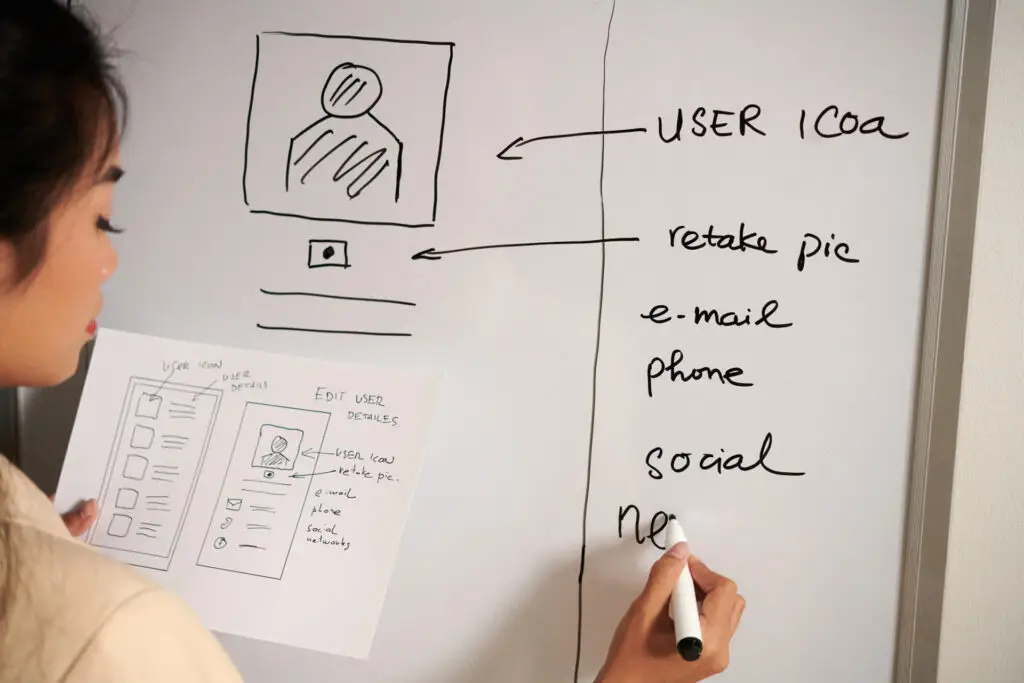
We’ve already talked about reverse mentoring, where young UX talents play a key role in the development and integration of 40+ professionals transitioning into the field. But we can also talk about the mentoring provided by experienced professionals toward young UX talents — especially in the UX that goes beyond the screen.
Senior professionals bring exceptional value through mentorship and team development. As UX teams grow increasingly multidisciplinary, leadership that nurtures diverse talents becomes essential for delivering cohesive experiences.Seasoned practitioners often excel at developing others while creating psychological safety necessary for creative collaboration.
Mature UX professionals typically bring several mentorship advantages:
- They’ve witnessed enough career paths to offer personalized guidance
- They understand the importance of strategic skill development
- They recognize potential in team members that others might overlook
- They’ve developed teaching approaches that accommodate different learning styles
- They value developing others as much as delivering their own work
This mentorship dimension creates exponential value by amplifying team capabilities rather than just individual contributions. A mature practitioner might produce excellent work personally, but when they elevate an entire team’s performance, their impact multiplies dramatically.
The mentorship value extends beyond formal reporting relationships. Experienced professionals practicing UX beyond the screen often serve as cultural anchors — modeling collaboration techniques, demonstrating healthy conflict resolution, and establishing norms that foster psychological safety. These cultural contributions rarely appear in performance reviews, yet they often determine whether teams can successfully address complex experience challenges.
Ethical Considerations and Responsible Design
As technology becomes increasingly powerful and pervasive, ethical considerations have moved from philosophical discussions to practical design requirements. UX beyond the screen necessarily includes evaluating potential consequences—both intended and unintended—of design decisions. Here again, mature professionals bring valuable perspective that younger practitioners might lack.
Life experience helps seasoned UX practitioners anticipate how design choices might:
- Impact vulnerable populations differently than mainstream users
- Create problematic incentives or addiction patterns
- Undermine privacy expectations or social norms
- Reinforce existing biases or inequalities
- Generate environmental consequences
This ethical dimension of UX requires professionals who can balance innovation with responsibility, business goals with societal impacts. Mature practitioners often demonstrate courage in raising uncomfortable questions about proposed features or implementation approaches that could create harm even while delivering apparent benefits.
Consider dark patterns—interface designs that manipulate users into actions they might not choose with full awareness. Identifying and avoiding these patterns requires both ethical sensitivity and business courage. Mature professionals practicing UX can often advocate effectively against manipulative approaches by framing long-term business risks alongside ethical concerns.
Cross-Cultural and Accessibility Expertise

In our increasingly global market, UX beyond the screen must account for tremendous diversity in user backgrounds, abilities, and contexts. Creating truly inclusive experiences requires nuanced understanding of how cultural factors, accessibility needs, and contextual constraints shape user expectations and behaviors. Mature professionals often bring valuable perspective to these challenges.
Through decades of life experience, seasoned practitioners have typically encountered greater diversity than their younger colleagues. They’ve witnessed how supposedly universal design principles sometimes reflect very specific cultural assumptions. This awareness helps them approach UX challenges with appropriate humility about their own blind spots.
Mature UX professionals frequently excel at:
- Recognizing when research approaches need cultural adaptation
- Identifying assumptions in design solutions that might not translate globally
- Understanding generational differences in technology expectations
- Considering accessibility as fundamental rather than supplemental
- Designing for contexts with significant resource constraints
These cross-cultural and accessibility considerations represent an essential aspect of UX beyond the screen that benefits tremendously from accumulated wisdom. Rather than treating edge cases as exceptions, mature practitioners often incorporate diverse requirements into foundational thinking, creating more robust solutions from the start.
Balancing Innovation with Practicality
A final area where mature professionals contribute distinctively to UX involves balancing innovation with implementation realities. While creative breakthroughs certainly matter in experience design, successful implementation requires navigating organizational constraints, technical limitations, and change management challenges. Seasoned practitioners have typically developed judgment about when to push boundaries versus when to work within existing systems.
This balancing act manifests in several ways:
- Recognizing which battles are worth fighting within organizational contexts
- Understanding implementation dependencies that might derail ambitious concepts
- Identifying incremental improvements that build momentum toward larger goals
- Creating adoption strategies that overcome organizational resistance
- Designing solutions that accommodate both ideal and fallback scenarios
The mature professional practicing UX beyond the screen doesn’t just generate innovative concepts; they craft implementable paths toward meaningful improvement. Their proposals reflect organizational realities without becoming imprisoned by current limitations. This pragmatic idealism often proves more valuable than either unconstrained creativity or excessive caution.
Embracing Your Unique Value in UX Beyond the Screen
If you’re a mature professional entering or advancing in UX, recognize that your accumulated wisdom represents tremendous value—particularly in these less obvious dimensions of design work. Your life experience isn’t baggage; it’s a competitive advantage that enables you to see connections, anticipate challenges, and navigate complexity that might overwhelm less experienced practitioners.
Rather than attempting to compete with younger designers on technical proficiency with the latest tools, consider how you might position yourself as a specialist in these UX beyond the screen domains. Organizations increasingly recognize that holistic experience improvements require exactly the strategic thinking, stakeholder management, and systems perspective that you’ve developed throughout your career.
Embrace opportunities to tackle messy, ambiguous problems that defy simple interface solutions. Volunteer for cross-functional initiatives that require translating between technical and business perspectives. Look for roles that explicitly value service design, research leadership, or experience strategy. These specialties often reward your accumulated wisdom more than pure interface design positions.
Remember that UX beyond the screen will only grow in importance as digital interfaces become increasingly standardized. The competitive advantage for organizations increasingly comes not from having marginally better screens but from creating coherent experiences across touchpoints and throughout customer journeys. Your ability to envision and implement these integrated experiences represents tremendous value in today’s experience economy.
Frequently Asked Questions
What specific roles focus on UX beyond the screen?
Titles like Service Designer, UX Strategist, Experience Director, Research Lead, and Design Operations Manager often focus extensively on these less visible aspects of experience design. Additionally, many senior-level UX positions incorporate significant responsibilities regardless of specific title.
Do I need technical skills to work in the broader areas of UX?
While technical familiarity helps, these domains typically value strategic thinking, stakeholder management, and research sophistication more than coding or software proficiency. Understanding technical constraints matters, but implementation details can often be handled by specialists if you provide clear direction.
How can I highlight my capabilities in interviews?
Focus on telling stories about how you’ve addressed systemic challenges, navigated complex stakeholder environments, or implemented sustainable improvements. Emphasize outcomes that transcend interface changes to demonstrate your broader perspective on experience design.
Can I transition into UX beyond the screen from non-design backgrounds?
Absolutely! Many successful practitioners in service design, research leadership, and experience strategy come from backgrounds in psychology, anthropology, business, or other domains. Your prior expertise often provides valuable perspective that complements design thinking approaches.
How can I stay up to date in the broader areas of UX?
Follow thought leaders in service design, systems thinking, and organizational design. Attend conferences focused on strategic UX rather than just tactical implementation. Join communities of practice where experienced professionals discuss complex challenges beyond interface design.
Is UX beyond the screen relevant for small organizations?
While large enterprises may have dedicated service design or strategy roles, small organizations often need generalists who can address these dimensions alongside more visible design work. Your ability to consider business constraints and implementation realities may prove even more valuable in resource-constrained environments.
Posts recentes